


Biscuit: Warm Baked Sweetness in Perfumery
Culinary Roots and Aromatic Memory
The scent of biscuit evokes kitchens filled with the warmth of freshly baked goods. Known across cultures in many forms – from delicate butter cookies to crisp shortbread – biscuits are created by baking simple ingredients such as flour, butter, sugar, and eggs. The Maillard reaction during baking produces the golden-brown crust and deep, toasty aroma that makes biscuits universally comforting.
In perfumery, the biscuit accord draws on this familiar culinary experience. It captures the essence of golden pastry, sweetened dough, and buttery richness, translating the indulgence of baked goods into fragrance form.
Creation in Perfumery
Since natural distillation of baked biscuits is not feasible, perfumers construct the biscuit impression using gourmand techniques. This involves layering molecules and accords that replicate the sweet, warm, and toasty profile:
- Lactonic notes – derived from molecules such as gamma-decalactone to mimic creamy and buttery facets.
- Maltol and ethyl maltol – provide caramelized sugar and candy-like warmth.
- Vanillin – adds a soft, custard-like sweetness.
- Nutty and cereal accords – achieved through pyrazines and aldehydes that suggest baked flour and toasted grains.
- Cocoa and caramel touches – enhance depth and mimic oven-browned crust.
Through these components, perfumers design an accord that evokes the softness of dough, the sweetness of sugar, and the golden finish of baking.
Olfactory Profile
The biscuit note in perfumery is warm, sweet, and slightly buttery. It carries a balance of floury dryness and creamy richness, with undertones of caramelized sugar and toasted grains. Depending on the structure, it can lean toward crisp shortbread, buttery cookies, or soft pastry.
Its aroma is evocative of comfort and indulgence, aligning naturally with gourmand compositions while also blending with fruity, floral, and woody notes.
Role in Composition
Biscuit serves as a versatile gourmand element that can shape the character of many fragrance families:
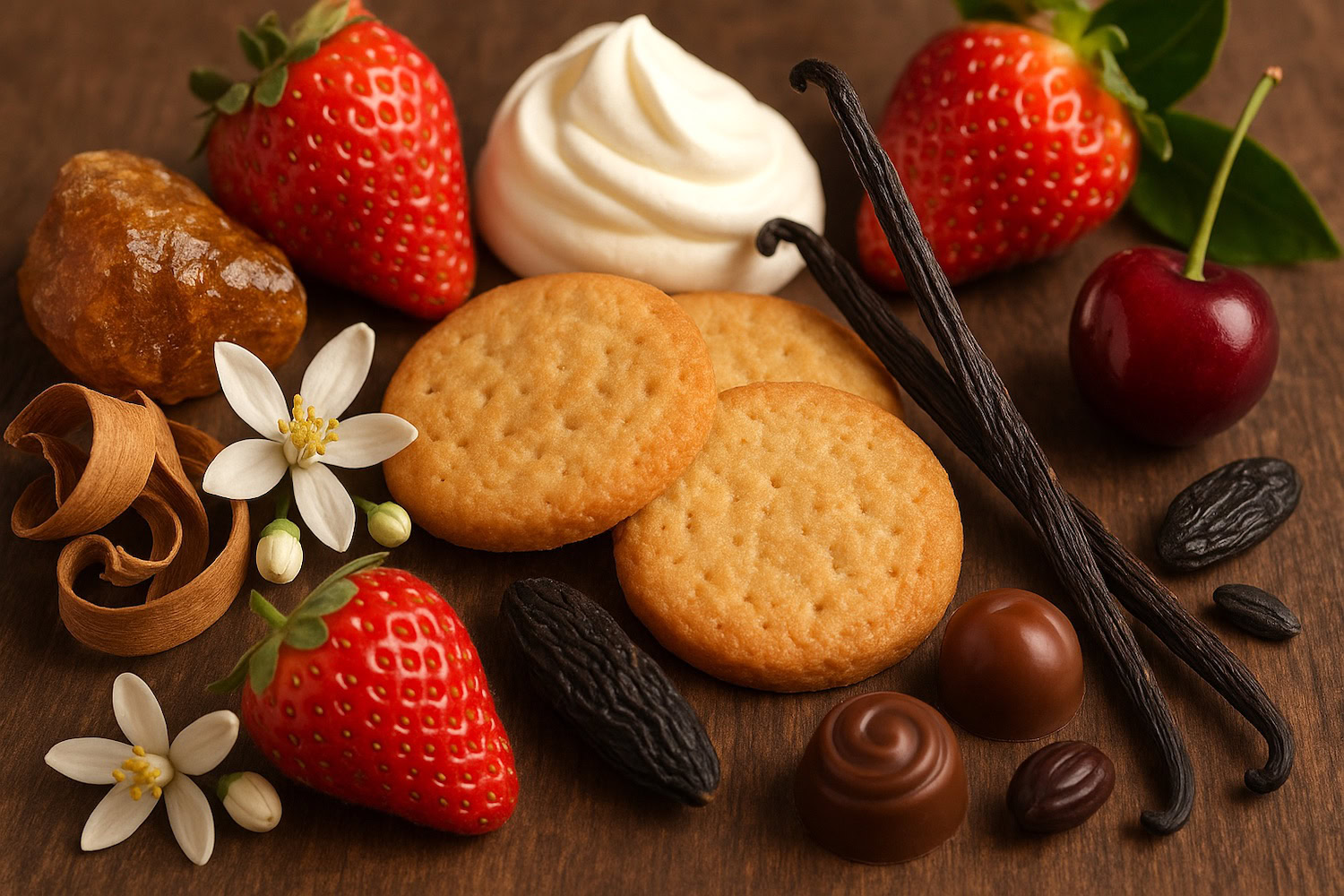
- Dessert-inspired perfumes – forms the core of sweet compositions, paired with vanilla, praline, or whipped cream.
- Fruity blends – complements notes like strawberry, cherry, or banana cream with baked sweetness.
- Floral gourmand designs – softens white florals such as jasmine or orange blossom with a creamy, edible facet.
- Woody and amber fragrances – adds roundness when layered over sandalwood, amber, or tonka bean.
Its versatility allows perfumers to create scents that feel indulgent, cozy, and imaginative.

Aroma Chemistry
Several key molecules contribute to the biscuit accord:
- Ethyl maltol – adds a caramel-cotton candy sweetness.
- Vanillin – infuses creamy, dessert-like richness.
- Furaneol – provides a baked, toasty impression.
- Gamma- and delta-lactones – recreate buttery smoothness.
- Pyrazines – contribute nutty and roasted nuances.
Together, these elements mirror the multi-layered aroma of biscuits fresh from the oven.
Applications in Perfumery
Biscuit is often used in gourmand and niche creations, where perfumers experiment with dessert-inspired accords. It pairs with chocolate, caramel, coffee, and creamy milk notes, enhancing edible atmospheres. At the same time, it works as an accent in fruity-floral perfumes, where it adds warmth and playfulness.
Its ability to add texture makes it valuable in layering. In base structures, biscuit can provide continuity between sweet top notes and deeper woody or amber accords.
Sensory Impression
The biscuit note conveys comfort, warmth, and nostalgia. It recalls the experience of home baking, festive gatherings, or simple indulgences shared with others. When woven into a fragrance, it delivers a balance of sweetness and richness that feels both familiar and luxurious.
Enduring Aroma
In perfumery, biscuit captures the baked essence of golden pastries and sweetened dough. Through the artistry of reconstructed accords, it becomes a note that enriches fragrances with warmth, softness, and edible charm. Its presence bridges culinary memory and olfactory creativity, offering compositions that resonate with both comfort and refinement.


