


Brown Sugar: Caramelized Sweetness in Perfumery
Culinary Roots and Cultural Significance
Brown sugar is created by combining sucrose crystals with molasses, either naturally retained during the refining process or reintroduced to white sugar.
The presence of molasses gives brown sugar its rich flavor, darker hue, and deeper aromatic complexity. Depending on the molasses content,
it can range from light to dark, with each variety offering its own aromatic balance.
Across cultures, brown sugar has been celebrated in confectionery, beverages, and baked goods, where its warm sweetness enhances both taste and aroma.
In perfumery, it has been translated into a gourmand note that captures the richness of caramelized sugar and molasses.
Creation in Perfumery
Brown sugar is not distilled directly from the ingredient but reconstructed as an accord. Perfumers build its profile through a blend of synthetic and natural aroma molecules:
- Maltol and ethyl maltol – For caramelized sugar tones.
- Furaneol – Adds roasted, toasty nuances.
- Vanillin and coumarin – Contribute creaminess and warmth.
- Lactones – Create milky roundness.
- Woody or resinous undertones – Echo the earthy sweetness of molasses.
This construction yields an accord that feels sweet, golden, and richly textured.
Olfactory Profile
Brown sugar has a warm, sweet, and caramel-like aroma with toffee nuances and gentle molasses depth.
Its scent is softer than pure caramel yet fuller than white sugar, giving an impression of comfort and indulgence.
It belongs firmly within gourmand perfumery, where edible notes bring richness and sensuality to compositions.
Role in Fragrance Composition
Brown sugar can serve as both a central element and a subtle modifier:
- In gourmand perfumes – Creates the backbone of dessert-inspired structures.
- In fruity blends – Deepens berries, apples, or tropical fruits with syrupy richness.
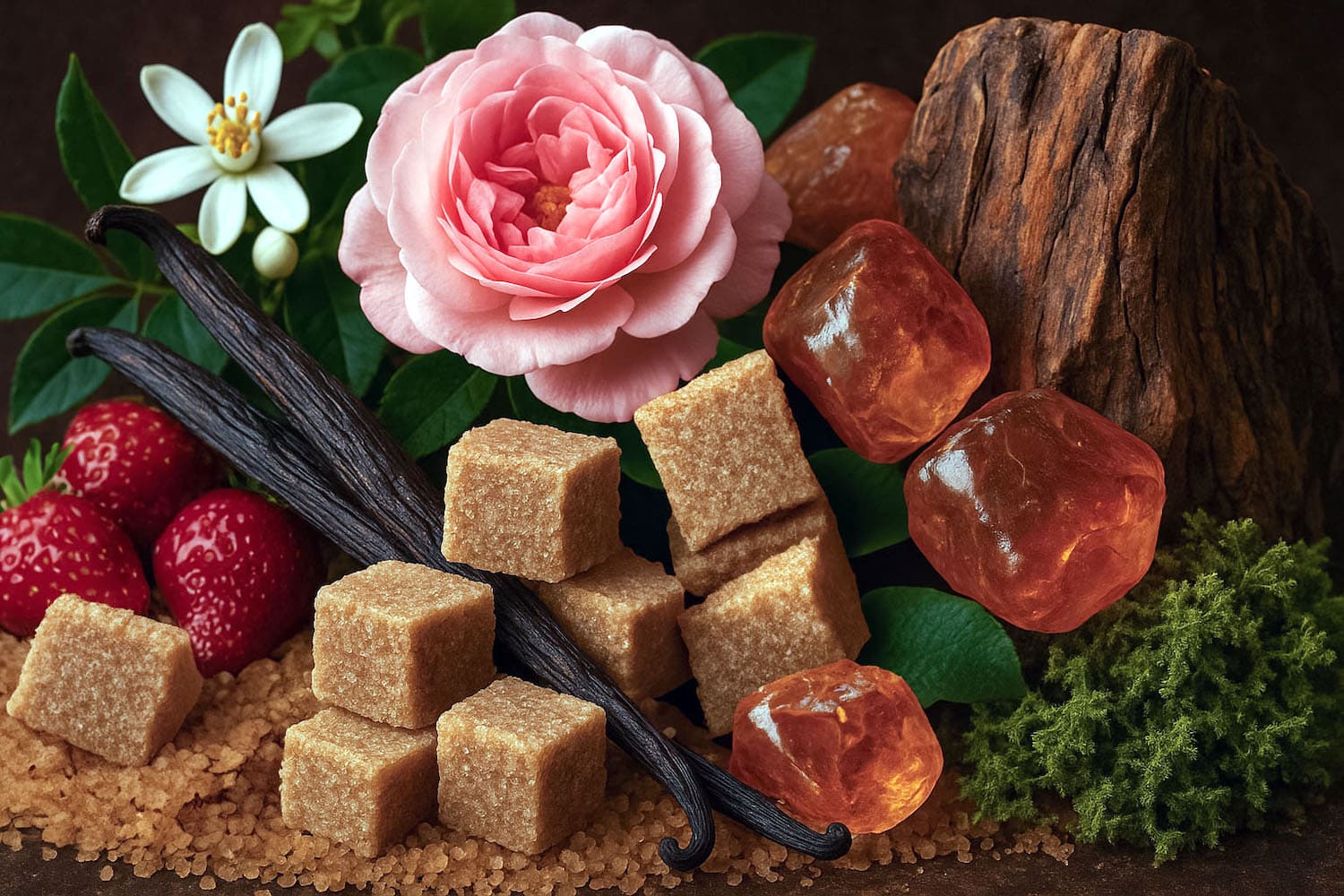
- In floral gourmands – Adds creamy sweetness to jasmine, rose, or orange blossom.
- In woody-amber bases – Lends smoothness when paired with sandalwood, amber, or musk.
Its adaptability makes it useful across multiple fragrance families.

Aroma Chemistry
The brown sugar accord is supported by:
- Ethyl maltol – Sweet, candy-like caramelization.
- Maltol – Baked, jammy tones.
- Furaneol – Roasted sugar and pastry nuance.
- Vanillin – Smooth, creamy sweetness.
- Coumarin – Almond-tonka warmth that complements molasses-like depth.
Together, these recreate the full aromatic complexity of brown sugar.
Iconic Perfumes Featuring Brown Sugar
Viktor & Rolf Bonbon (2014)
Features brown sugar alongside caramel and fruity accords, forming a luminous gourmand signature.
Aquolina Pink Sugar (2004)
Highlights brown sugar with cotton candy and vanilla, creating a playful edible impression.
Prada Candy (2011)
Blends brown sugar with musk and benzoin, shaping a creamy gourmand structure.
Britney Spears Fantasy (2005)
Incorporates brown sugar within its gourmand heart, complementing white chocolate and cupcake accords.
Sensory Impression
The note of brown sugar in fragrance suggests warmth, indulgence, and familiarity.
It recalls baked pastries, caramel sauces, and glazed confections, while also carrying elegance when integrated into sophisticated structures.
Its presence in a fragrance can evoke memory while adding richness and depth.
Lasting Resonance
Brown sugar exemplifies the way perfumery translates culinary pleasure into scent.
Through reconstructed accords, perfumers capture its caramelized sweetness and molasses undertones, weaving them into compositions that balance comfort with artistry.
Within gourmand design, brown sugar stands as a note of richness and golden warmth, a reminder of the enduring bond between taste and aroma.


Leave a Comment About This Perfume