


Blood Orange: Vibrant Citrus Energy in Fragrance Design
Botanical Origins
Blood orange (Citrus × sinensis) is a variety of sweet orange known for its red-hued flesh and aromatic zest. The coloration comes from anthocyanins, pigments that form during cool nights of the ripening season. Cultivation is centered in Mediterranean regions such as Italy and Spain, as well as in parts of California. The peel holds essential oils that are cold-pressed for perfumery, yielding a scent that blends freshness with sweet and tangy facets.
Historical and Cultural Context
Blood orange has long been valued in Mediterranean culture as a fruit symbolizing vitality and abundance. Its oil entered perfumery alongside other citrus ingredients such as bergamot, mandarin, and lemon, expanding the palette of fresh materials available to perfumers. Its vivid aroma and unique profile secured its role within both traditional cologne structures and modern blends.
Extraction in Perfumery
The oil of blood orange is most often obtained by cold pressing the peel, a method that preserves the brightness of its volatile compounds. In some cases, molecular distillation is used to refine the oil, highlighting its crisp citrus qualities. To ensure stability in formulas, perfumers often employ rectified or fractionated versions of the oil.
Olfactory Profile
The scent of blood orange is lively, juicy, and slightly tart, with subtle berry nuances. A gentle floral sweetness rounds the profile, giving balance to its fresh and tangy nature.
- Citrus freshness – Sparkling zest and juice.
- Sweetness – Rounded, fruity warmth.
- Tartness – A sharp lift that enlivens the blend.
- Berry nuance – A faint red-fruit undertone.
Role in Fragrance Composition
Blood orange serves as a bright top note and a versatile enhancer across fragrance families:
- Citrus accords – Complements bergamot, mandarin, and lemon with juicy vibrancy.
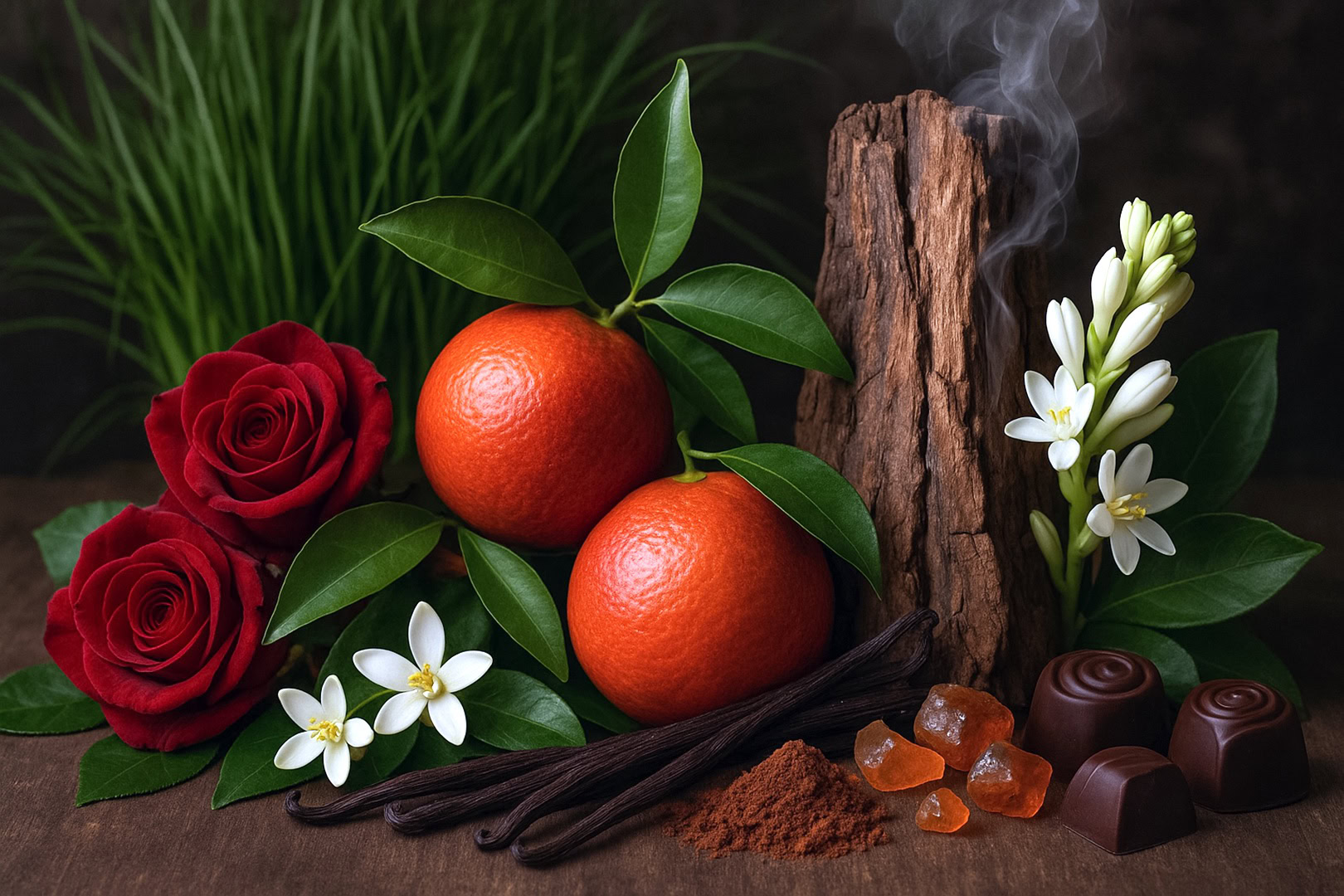
- Fruity-floral blends – Lifts blossoms such as jasmine, neroli, and rose.
- Gourmand perfumes – Balances sweet notes like vanilla, caramel, or chocolate.
- Woody or amber bases – Adds radiance and clarity to denser accords.
Aroma Chemistry
Blood orange oil contains a range of natural compounds:
- Limonene – Fresh citrus backbone.
- Linalool – Soft floral nuance.
- Citral – Lemon-like brightness.
- Anthocyanin-related influence – Indirectly shapes the fruit’s perceived depth.

Iconic Perfumes Featuring Blood Orange
Atelier Cologne Orange Sanguine (2011)
Places blood orange at the center, with geranium and sandalwood.
Jo Malone London Orange Bitters (2016)
Blends blood orange into a festive citrus accord with warm woods and amber.
L’Artisan Parfumeur Mandarina Corsica (2015)
Combines citrus brightness with gourmand depth, highlighting blood orange facets.
Hugo Boss Boss Orange Woman (2009)
Introduces blood orange in the top notes for a vibrant opening.
Sensory Impression
Blood orange evokes sunlit orchards and Mediterranean groves. Its balance of sweetness, tartness, and subtle berry tone creates a lively, radiant impression that feels natural and inviting.
Continuing Influence
Blood orange remains an important citrus material in perfumery. Its ability to bridge freshness with warmth makes it adaptable in colognes, fruity-floral blends, gourmands, and oriental structures. Its enduring appeal ensures its continued role in both classic and contemporary fragrance design.


