Gourmand Accords: The Sweet Palette of Perfumery
Origins of the Gourmand Style
The idea of edible-inspired fragrances began to take shape in the late 20th century, though earlier compositions already used vanilla, tonka bean, and balsamic resins. During the 1990s, perfumers expanded this approach, translating the indulgence of desserts, confections, and beverages into olfactory form.
The term gourmand refers to accords that evoke sweet, edible sensations. These compositions engage memory, appetite, and pleasure, linking the world of taste with the artistry of scent.
Key Ingredients and Construction
Gourmand accords are rarely built on a single ingredient. They are crafted from blends of natural absolutes, isolates, and synthetics that recreate culinary impressions. Common building blocks include:
- Vanilla and tonka bean – Warm, creamy foundations of sweetness.
- Caramel and sugar notes – Created with maltol or ethyl maltol, producing candied richness.
- Chocolate and cocoa – From cocoa absolutes or pyrazines, evoking roasted depth.
- Coffee – Roasted facets that bring aromatic intensity and balance.
- Fruits – Candied, jammy, or ripe tones built with esters and lactones.
- Cream and milk notes – Velvety textures constructed with lactones and musks.
- Pastry effects – Almond, hazelnut, or biscuit-like accords enhanced by heliotropin, coumarin, or nutty aromatics.
These elements can appear alone or layered with florals, spices, and woods for greater complexity.
Olfactory Profile
The gourmand spectrum is diverse, spanning light sweetness to dense richness:
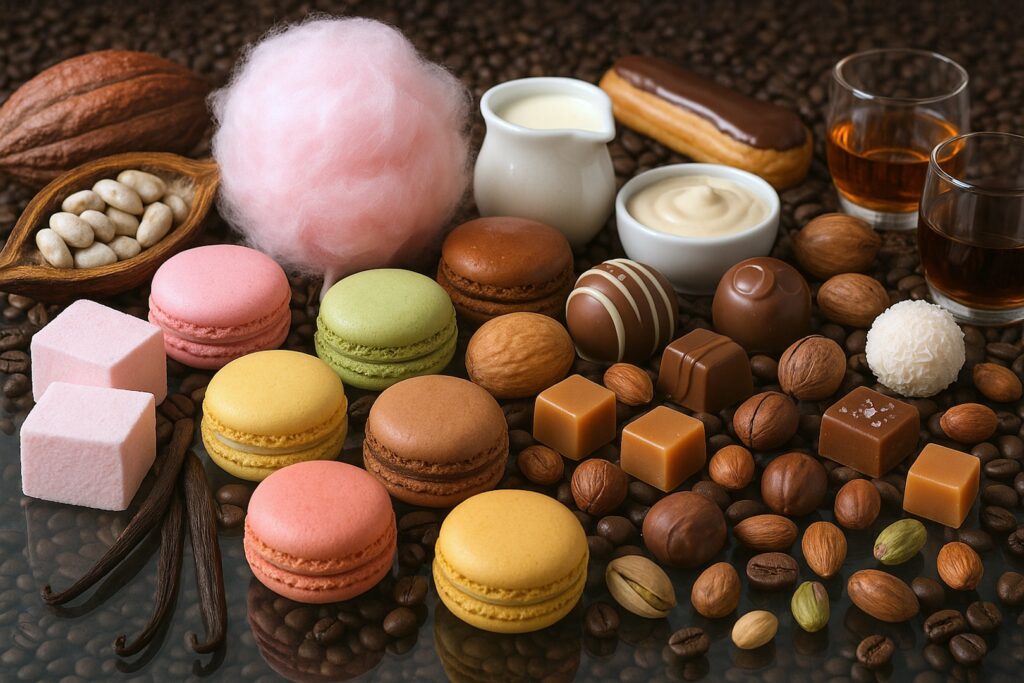
- Confectionary – Vanilla, caramel, marshmallow, praline.
- Beverage-inspired – Coffee, cocoa, liqueurs, tea.
- Fruity-sweet – Jammy berries, candied citrus, tropical desserts.
- Pastry-like – Almond cream, macarons, biscuits, hazelnut pralines.
The result may be airy and playful or layered and indulgent, depending on construction.
Role in Fragrance Composition
In perfume design, gourmand accords can serve multiple purposes:
- Centerpieces – Anchoring dessert-inspired structures.
- Accents – Adding sweetness to floral or fruity blends.
- Balancing elements – Softening spices, woods, or resins with edible warmth.
- Comfort notes – Invoking nostalgia and sensory pleasure.
They may stand alone as olfactory desserts or function as highlights within traditional families.
Aroma Chemistry
Much of the gourmand palette is achieved through synthetics that replicate edible effects:
- Ethyl maltol – Candy-like caramelization.
- Coumarin – Nutty, almond warmth with hay-like nuances.
- Vanillin and ethyl vanillin – Custard-like sweetness.
- Pyrazines – Roasted coffee, cocoa, and nut effects.
- Lactones – Creamy textures that give body.
- Heliotropin – Almond-marzipan softness with powdery sweetness.
Together, these molecules create the edible signatures of modern gourmand perfumery.
Sensory Impression
Gourmand perfumes evoke patisseries filled with confections, kitchens fragrant with baked goods, and coffeehouses warmed by roasted beans and pastries. They connect scent to taste, translating flavors into olfactory memories that linger on the skin.
Enduring Resonance
Gourmands remain one of the most expressive styles in perfumery. They extend fragrance design beyond flowers and woods into the realm of desserts and confections. Their resonance lies in their ability to link comfort with imagination, creating scents that are both playful and deeply evocative.