Musks & Animalics: The Sensual Backbone of Perfumery
Historical Significance
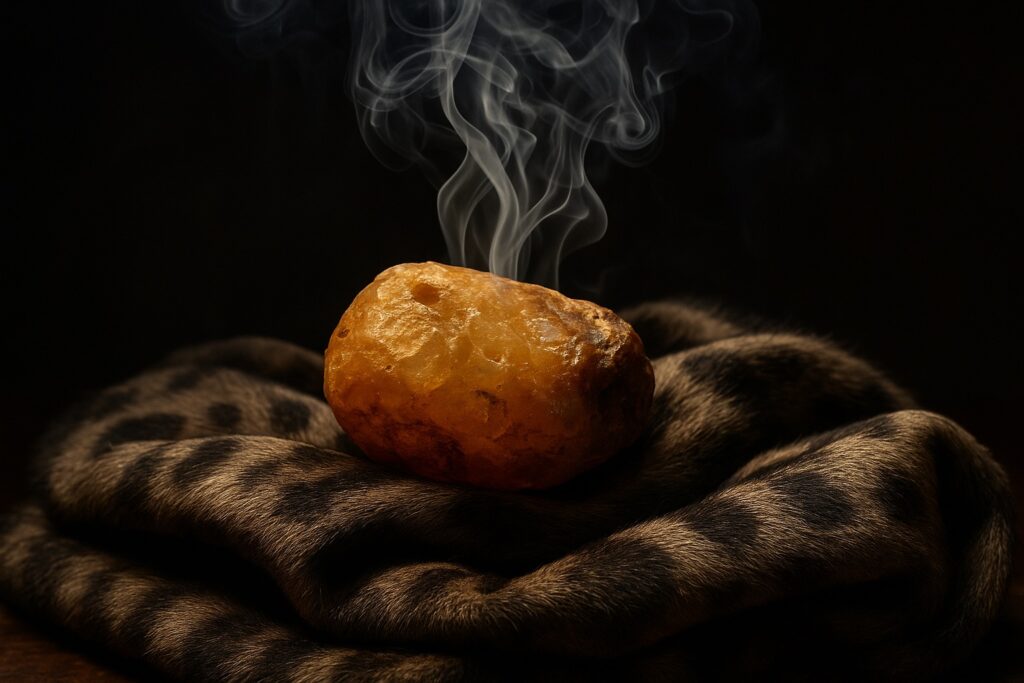
Musks and animalic materials have long been linked with warmth and sensual depth in fragrance. For centuries, natural musk from the musk deer, civet from the African civet cat, castoreum from beavers, and ambergris from sperm whales enriched perfumes with persistence and radiance. These rare materials shaped traditions across cultures, valued both for their scarcity and their ability to anchor compositions with longevity.
Due to ethical and conservation concerns, natural animalic substances are rarely used today. They have been replaced by synthetic alternatives that preserve olfactory qualities while ensuring sustainability.
From Nature to Synthesis
The discovery of synthetic musks in the late 19th and early 20th centuries transformed perfumery. Nitro musks, later polycyclic musks, and now macrocyclic musks provided safe and reliable materials that capture softness, warmth, and sensuality. Animalic nuances once drawn from civet or castoreum are now recreated with molecules such as civetone, muscone, and synthetic leathery-balsamic notes. Ambergris has largely been substituted with ambroxide, delivering a radiant amber-like impression.
Olfactory Profiles
Musks
- Clean musks – Powdery, soft, and skin-like.
- Warm musks – Smooth, creamy, and enveloping.
- Radiant musks – Airy and transparent, enhancing diffusion.
- Macrocyclic musks – Refined and persistent, with natural elegance.
Animalics
- Civet – Musky, slightly fecal, with floral and leathery undertones.
- Castoreum – Leathery, smoky, with resinous depth.
- Ambergris – Marine and soft, with radiant amber warmth.
- Costus (plant-derived) – Oily, animalic, with fur-like facets.
Together, musks and animalics add warmth, sensuality, and persistence to fragrance structures.
Role in Fragrance Composition
Musks and animalics serve multiple roles across perfume families:
- As fixatives – Extending the life of volatile notes and delicate florals.
- As bases – Providing depth in amber, leather, and oriental compositions.
- As enhancers – Softening edges and creating rounded warmth.
- As skin notes – Mimicking the scent of skin to heighten intimacy.
Their capacity to bind materials together ensures harmony within complex blends.
Aroma Chemistry
Key molecules that define musk and animalic effects include:
- Muscone and civetone – Macrocyclic musks with natural warmth.
- Galaxolide and tonalide – Polycyclic musks with soft, powdery qualities.
- Ambrettolide – A vegetal musk from ambrette seeds.
- Ambroxide – A principal ambergris molecule with woody-amber resonance.
- Synthetic civetone – Recreating the animalic depth of civet.
These molecules provide both olfactory richness and technical stability.
Sensory Impression
Musks and animalics in perfume convey intimacy, warmth, and atmosphere. They may suggest the softness of skin, the texture of leather, or the radiance of ambered warmth. Their presence adds persistence and depth, linking fragrance to the sensory experience of closeness.
Enduring Resonance
Musks and animalics remain integral to perfumery, connecting historical traditions with modern design. Although natural animal-derived materials are now seldom used, synthesis ensures their legacy continues. They form the sensual backbone of many fragrances, sustaining their place as essential elements in olfactory creation.