

The release carries strong historical references connected to the House of Guerlain and French cultural heritage. In 1853, Pierre-François-Pascal Guerlain created Eau de Cologne Impériale for Empress Eugénie. The occasion introduced the Bee Bottle, produced by Pochet du Courval and decorated with the bees of the Empire alongside a festoon motif inspired by the Vendôme Column.
Jardin de l'Élysée returns to that historic bottle silhouette nearly two centuries later. The edition appears with a ribbon in the colors of the French flag and a decorative tassel created as a tribute to the French Republic. Guerlain confirmed that only 500 bottles were produced.
The fragrance arrives in a 125ml Bee Bottle accompanied by a 30ml refillable spray bottle designed for daily use. A small funnel is included for transferring the fragrance between formats. Pochet du Courval continues the production of the Bee Bottle using techniques connected to traditional French glass craftsmanship.
Olfactory Group
Floral
Note Structure
Main Scent Accords
- Citrus
- White Floral
- Rose
- Tea
- Musky
- Ambergris
- Fresh
- Green
- Soft Floral
- Powdery
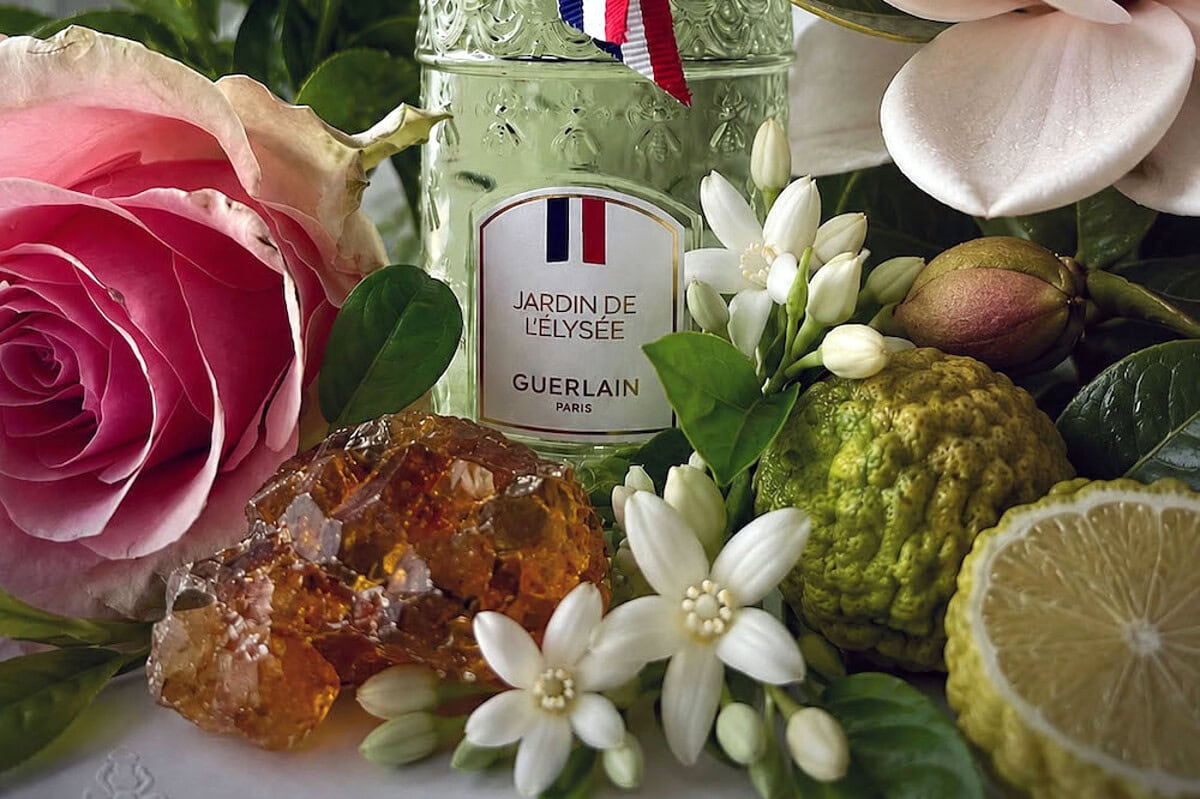
Delphine Jelk Shapes a Floral Composition Inspired by Spring Light
The structure of Jardin de l'Élysée moves through fresh citrus, luminous florals, soft musks, and delicate tea nuances. Bergamot introduces the opening with crisp brightness and a slightly aromatic edge that immediately recalls freshly cut greenery after rainfall in early spring.
Magnolia forms the central texture of the composition. Its creamy floral character creates a smooth and airy atmosphere around the jasmine sambac and rose accord. Jasmine sambac brings green floral intensity with subtle solar facets, while rose introduces velvety depth and natural softness inside the bouquet.
Tea notes shape the dry transparency that runs beneath the florals. The effect creates an impression of leaves warmed by daylight and touched by humid garden air. Ambergris adds mineral warmth with soft diffusion, while musk gives the fragrance a skin-like finish that remains quiet and polished.
The Bee Bottle and the Legacy of Guerlain Craftsmanship
The Bee Bottle remains one of the most recognizable objects connected to Guerlain history. Its surface is decorated with embossed bees inspired by the imperial symbolism of Napoleon III. The bottle first appeared alongside Eau de Cologne Impériale launched in 1853 for Empress Eugénie.
For Jardin de l'Élysée, the historic flacon receives ceremonial detailing linked to the French Presidency. The tricolor ribbon introduces blue, white, and red around the neck of the bottle, while the decorative tassel references official French state emblems. The glass bottle continues to be produced by Pochet du Courval, a French manufacturer associated with luxury fragrance bottles since the seventeenth century.
Guerlain stated that the project also contributes to initiatives connected to the cultural and historical preservation of the Élysée Palace. The fragrance therefore carries a direct relationship with French decorative arts, historical craftsmanship, and ceremonial symbolism tied to the presidency.
Jardin de l'Élysée and the Atmosphere of the Palace Gardens
The inspiration behind Jardin de l'Élysée centers on the gardens surrounding the Élysée Palace during springtime. The fragrance reflects trimmed greenery, floral air moving through stone pathways, soft sunlight crossing trees, and the calm atmosphere hidden behind the ceremonial architecture of central Paris.
Delphine Jelk composed the fragrance with restrained floral textures and transparent materials that preserve clarity throughout the development of the scent. Tea and musk remain visible beneath the flowers, creating a smooth continuity across the structure of the Eau de Parfum.
Launched in 2026, Jardin de l'Élysée enters the Guerlain collection as a limited-edition release connected to French heritage, state symbolism, and the long history of the Bee Bottle. The fragrance also continues Guerlain’s historical relationship with the French Republic and the cultural memory surrounding the House since the nineteenth century.
You may also like
Akro Heat by Olivier Cresp Centers Red Chili in a Woody Eau de Parfum
Henry Rose Rhu Berry - rhubarb walks into the pastry case
Maison Margiela Letter Never Sent - Tokyo, 1995, sealed in ink
CLEAN RESERVE Dark Cherry Intense: Whipped Cherry After Hours
Tommy Hilfiger Freedom - music, scent and a new chapter for the brand