


Cherry: A Luscious Fruit Accord in Perfumery
Botanical Origins
Cherry trees belong to the Prunus genus, which includes species cultivated worldwide for fruit and blossoms. Sweet cherries (Prunus avium) and sour cherries (Prunus cerasus) are the most common varieties. In perfumery, cherries are valued for their balance of sweetness, tartness, and depth, offering a note that carries playful, sensual, and indulgent qualities.
The cherry note is not obtained from direct essential oil extraction, as the fruit yields little aromatic oil. Instead, perfumers recreate its impression through accords built from natural isolates and synthetics.
Historical and Cultural Context
Cherries hold symbolic meaning in different cultures. In Japan, cherry blossoms embody renewal and the transience of beauty. In European traditions, cherries often symbolize love, passion, and abundance. Their color and sweetness have made them frequent motifs in art, poetry, and gastronomy. In fragrance, cherries became part of gourmand and fruity-floral structures, where their vivid character adds richness and depth.
Creation in Perfumery
Reproducing the scent of cherries requires reconstruction, since direct extraction is impractical. Perfumers rely on a combination of molecules and accords:
- Benzaldehyde – An almond-cherry note often sourced from bitter almonds or synthetics.
- Esters – Such as ethyl butyrate and amyl acetate, adding juicy fruitiness.
- Coumarin and heliotropin – Providing powdery, almond-like warmth.
- Vanillin and ethyl maltol – Creating candied, confectionary sweetness.
- Floral and woody tones – Balancing fruitiness and giving structure.
These elements together form accords ranging from bright, fresh cherry to dense, liqueur-like interpretations.
Olfactory Profile
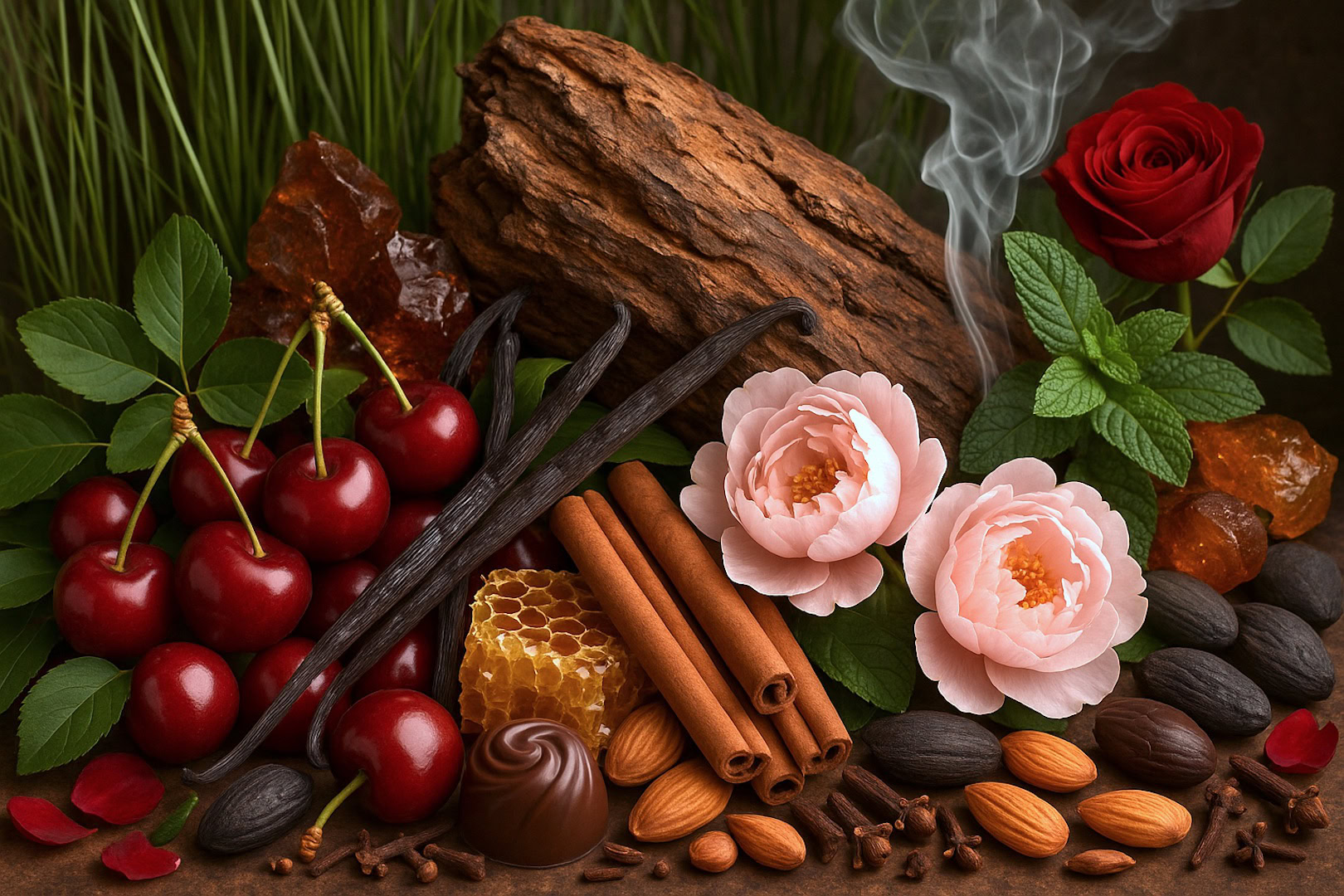
Cherry is lush, sweet, and tangy. It often begins with juicy red fruit brightness, moves toward almond warmth or jammy richness in the heart, and settles into bases touched by vanilla, tonka bean, or woods.
Main facets of its profile include:
- Juicy sweetness – Ripe fruit character.
- Tangy sharpness – Sour edge shaped by esters.
- Almond warmth – Bitter-sweet nuance from benzaldehyde.
- Confectionary depth – Syrupy or liqueur-like richness.
Role in Fragrance Composition
Cherry appears across several olfactory families:
- Gourmands – Paired with vanilla, chocolate, or caramel to form dessert-like accords.
- Fruity florals – Blended with rose, jasmine, or violet for playful effects.
- Oriental and woody blends – Introducing juiciness that softens resinous or smoky bases.
- Alcohol-inspired accords – Supporting amaretto, kirsch, or cherry liqueur notes.

Aroma Chemistry
The impression of cherry is shaped through multiple molecules:
- Benzaldehyde – Bitter almond-cherry backbone.
- Ethyl maltol – Jammy, candied sweetness.
- Coumarin – Warm, nutty depth.
- Ionones – Violet-like softness for floral pairing.
- Esters – Fresh, fruity tones.
Together, they recreate the layered aroma of cherries from bright fruit to syrupy liqueur.
Iconic Perfumes Featuring Cherry
Guerlain La Petite Robe Noire (2012)
Centers on candied cherry with almond, licorice, and vanilla.
Tom Ford Lost Cherry (2018)
Highlights cherry liqueur facets blended with almond, tonka bean, and woods.
Escada Cherry in the Air (2013)
Pairs cherry with marshmallow and raspberry for a playful fruity-gourmand effect.
Serge Lutens Rahat Loukoum (1998)
Features cherry within an almond and rose accord reminiscent of Turkish delight.
Sensory Impression
The cherry note conveys indulgence and vibrancy. It can suggest ripe fruit, sweet preserves, or the richness of liqueur. Its duality of brightness and depth allows it to express both playful charm and sensual warmth.
Lasting Resonance
Cherry remains a valued gourmand and fruity-floral ingredient. Whether evoked as fresh fruit, candied sweetness, or dark liqueur, it enriches compositions with a distinctive signature. By translating culinary and symbolic associations into scent, cherry continues to inspire perfumers and captivate fragrance enthusiasts.


