A Fragrance Born at the Blue Hour
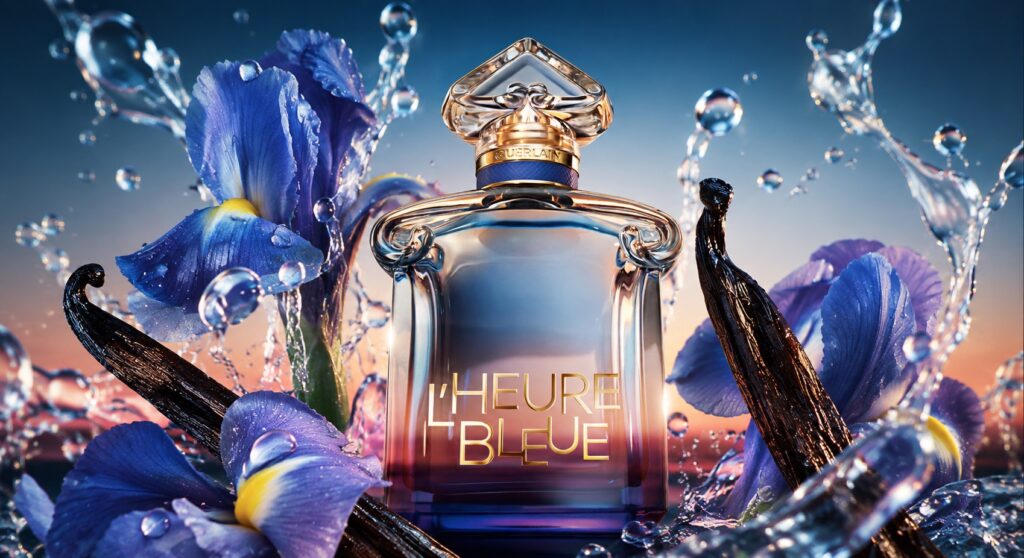
L’Heure Bleue takes its name from the blue hour, the fleeting interval created as daylight shifts into night. Sunset has passed. Blue light fills the sky, outlines blur, and the world enters a suspended atmosphere. Guerlain places this natural phenomenon at the emotional center of the fragrance.
Jacques Guerlain composed L’Heure Bleue in 1912. The perfumer described its inspiration through the image of sunset, approaching night, stillness, and harmony with light. Guerlain’s archives connect the creation with the Impressionist painters whose works Jacques Guerlain collected. Their attention to color, atmosphere, and transient light provides the cultural setting for the perfume’s story.
The House also records an intimate origin. Jacques Guerlain created L’Heure Bleue for his wife, Lili. Guerlain describes the composition through a spray of roses with iris, violet, and vanilla. This floral and powdery language carries the emotion of the blue hour into scent.
Its title fixes the perfume within a precise moment. L’Heure Bleue holds the quiet following sunset, the blue cast of the sky, and the intimacy of a fragrance conceived as a declaration of love. The 1912 creation became part of Guerlain’s Les Légendaires collection, where it remains available as L’Heure Bleue 1912.
The Olfactory Architecture of L’Heure Bleue 1912
The official olfactory pyramid for L’Heure Bleue 1912 begins with anise and bergamot. Guerlain assigns boldness to the anise note and freshness to bergamot. The opening introduces aromatic sweetness and citrus light at the first stage of the fragrance.
The heart contains neroli and a carnation accord. Guerlain describes this floral center through delicacy and sensuality. Iris and violet extend the powdery character of the composition. The House explains that violet is a mute flower in perfumery, since it does not release an extract. Guerlain perfumers recreate its floral, powdery scent through a violet accord.
The base features iris, vanilla, benzoin, and tonka bean. Guerlain defines this foundation as ambery and powdery. The House associates iris with powdery and woody accents. Vanilla contributes a gourmand and sensual tone.
Guerlain places violet, iris, and vanilla within its official description of the 1912 composition. Neroli and the carnation accord shape the floral heart. Anise, benzoin, and tonka bean complete the published pyramid. The House presents L’Heure Bleue 1912 as an amber floral fragrance linked to an impressionistic vision of suspended time.
Guerlain L’Heure Bleue Eau de Parfum Fragrance Profile
Fragrance: Guerlain L’Heure Bleue Eau de Parfum
Launch year: 2026
Perfumer: Delphine Jelk
Olfactory group: Amber Floral
Top notes: Airy ozonic accord, pear, neroli
Heart notes: Guerlain iris tincture, iris butter, jasmine
Base notes: Vanilla, ambroxan, musks
Main scent accords: Ozonic accord, iris, vanilla
The Inverted Heart Bottle
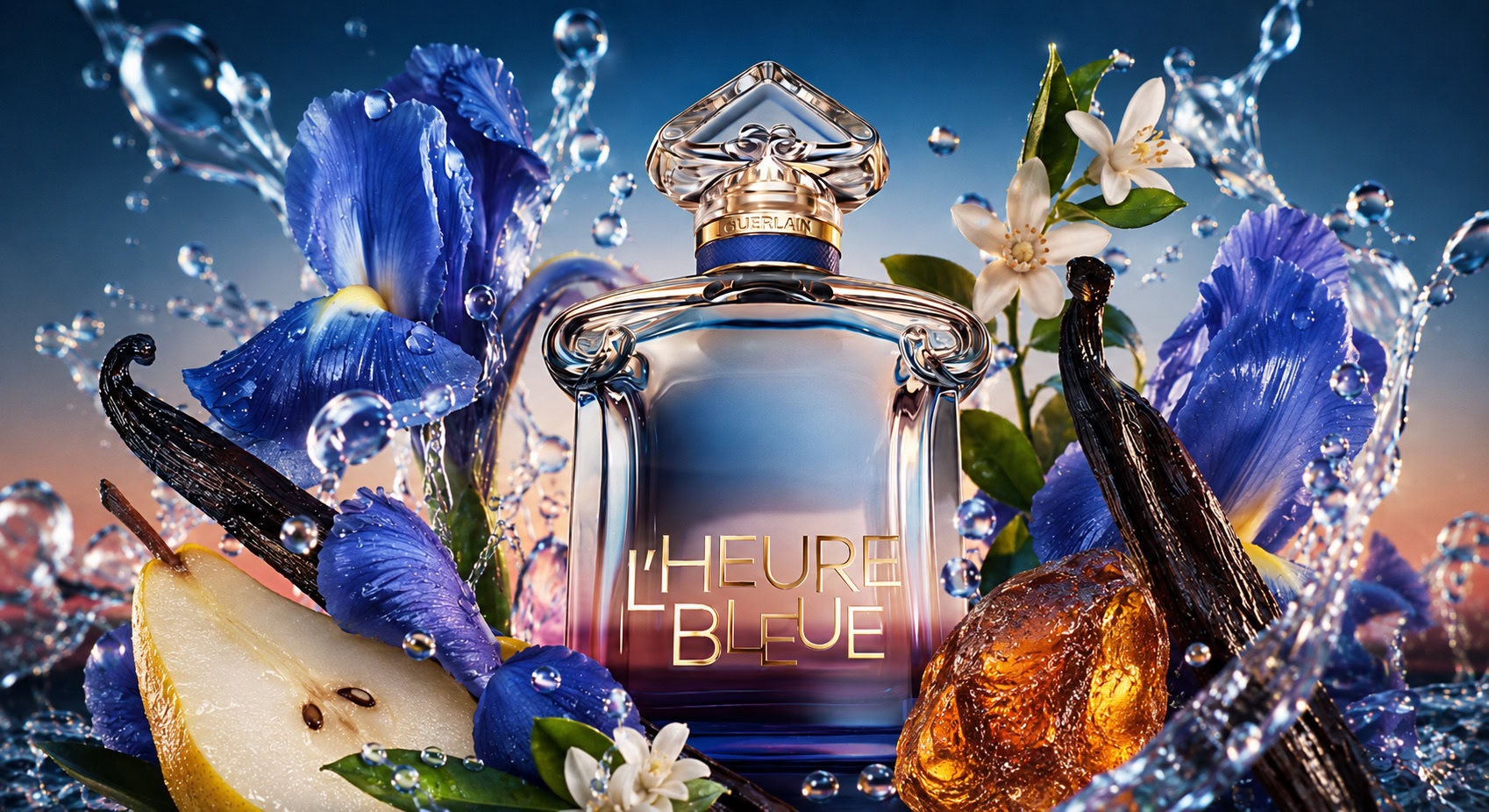
The Inverted Heart bottle entered Guerlain’s visual history in 1912. Raymond Guerlain designed the form. Its shoulders carry flowing scrolls associated with Art Nouveau, and its stopper forms a hollow heart. Guerlain records the stopper as a technical feat produced by the Baccarat crystal works.
The design turns the bottle into part of the L’Heure Bleue narrative. Curved glass frames the perfume, and the heart-shaped stopper recalls the creation’s dedication to Lili. The ornamental lines preserve the Art Nouveau context documented by the House.
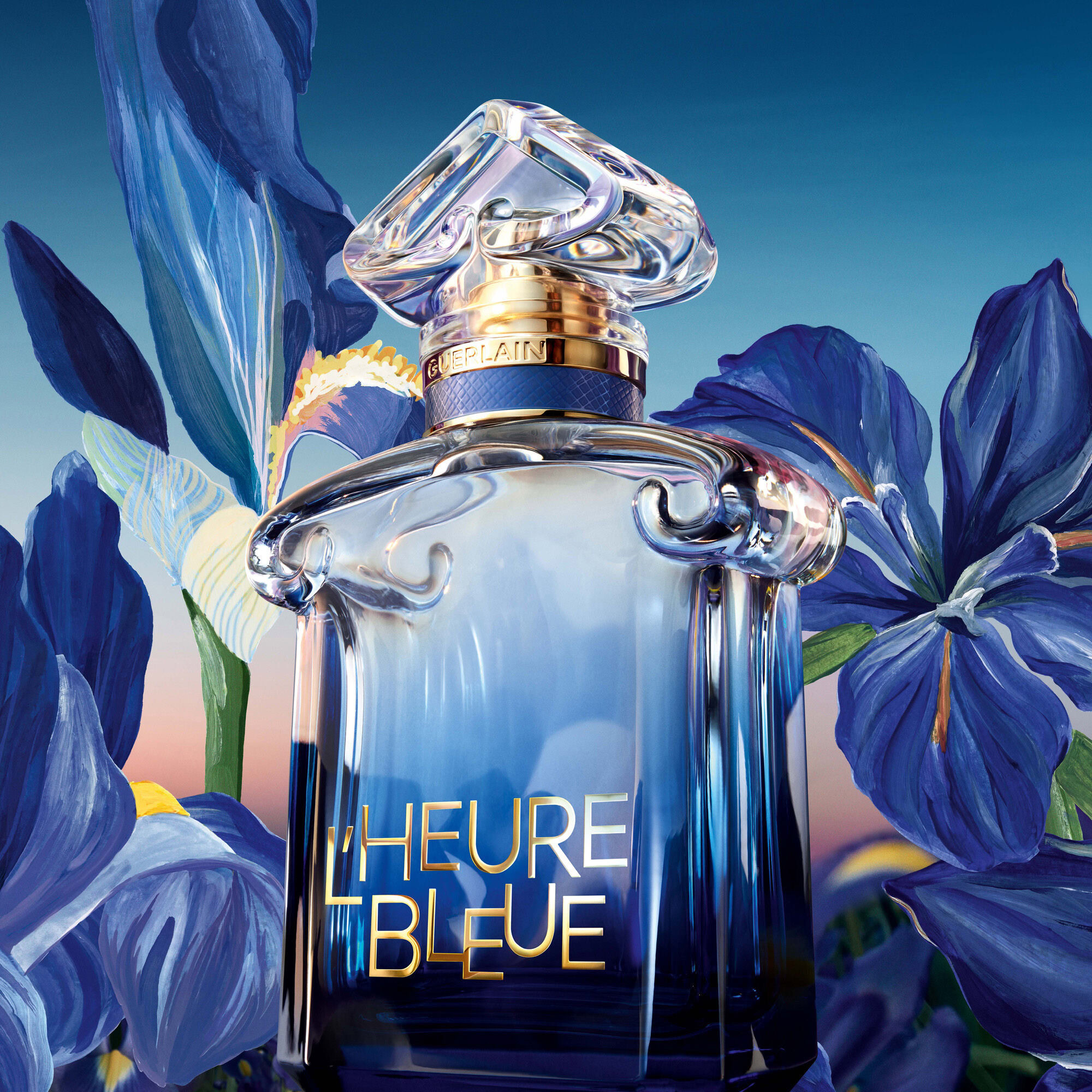
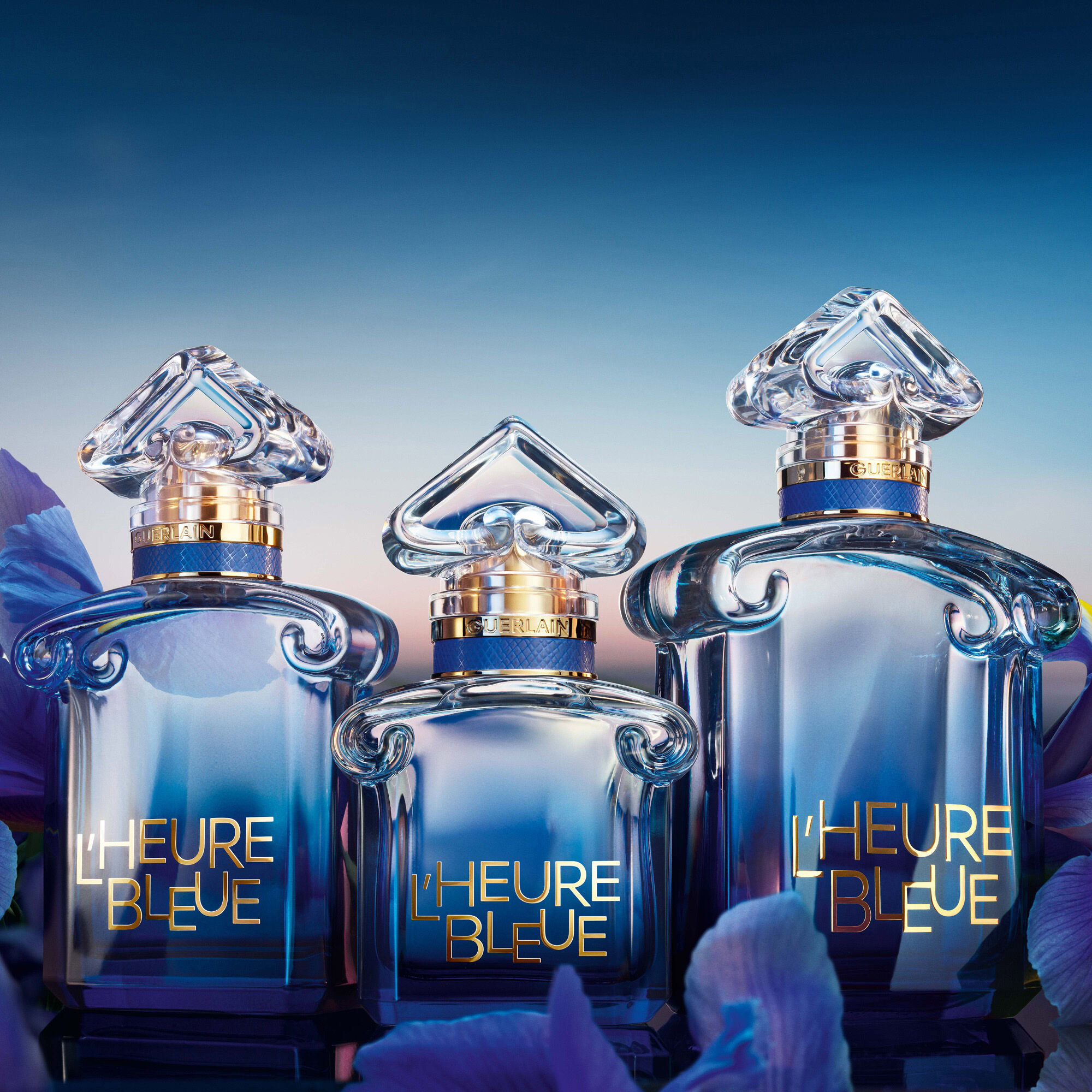
Guerlain revisited the Inverted Heart bottle for L’Heure Bleue Eau de Parfum. A deep blue gradient covers the glass, gold lettering presents the name, and the color evokes a fragment of the blue-hour sky. The current bottle is designed for refilling. Guerlain offers refills through its website and boutiques.
Delphine Jelk’s L’Heure Bleue Eau de Parfum
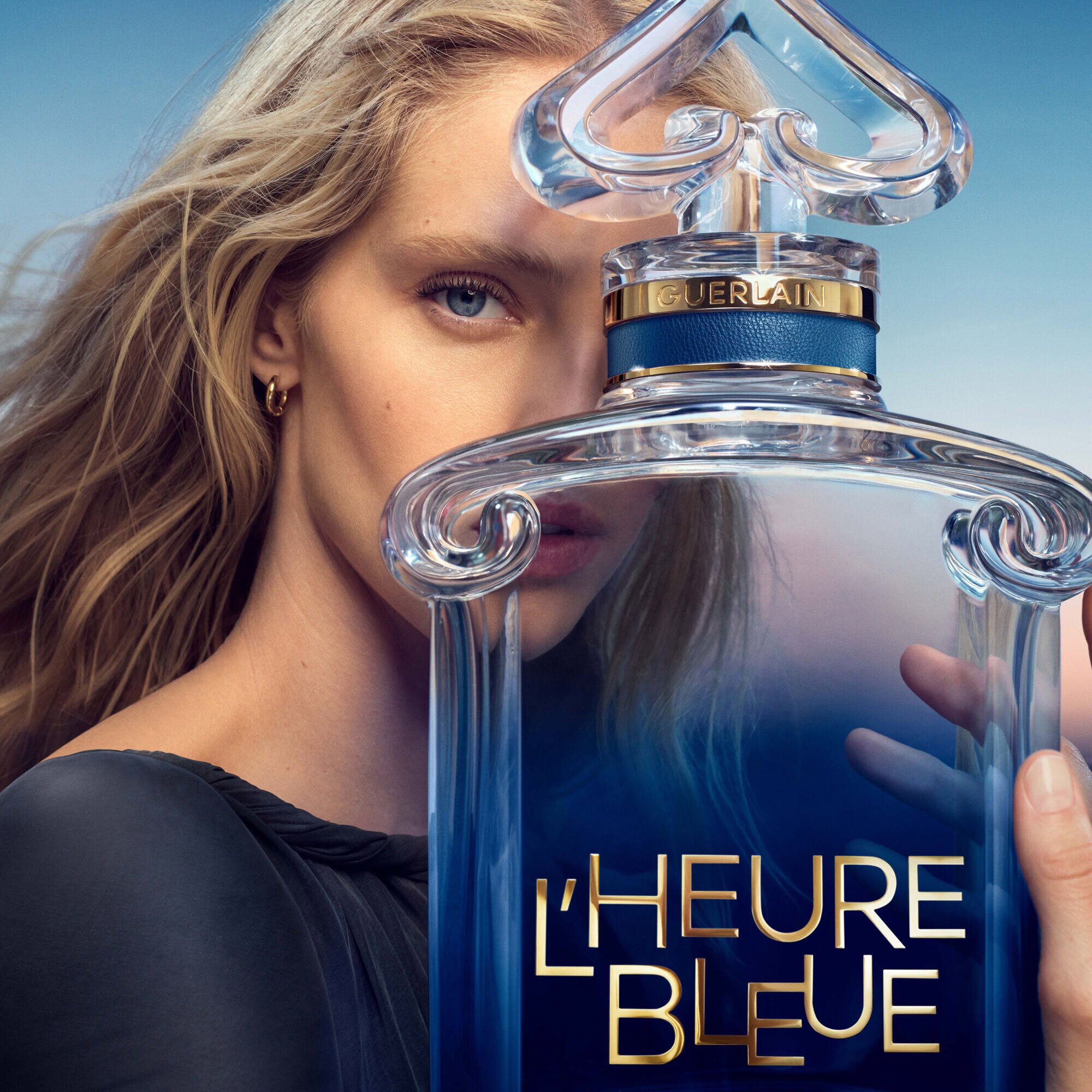
Delphine Jelk, Director of Guerlain Perfume Creation and Perfumer, signed the current L’Heure Bleue Eau de Parfum. Guerlain defines the fragrance as a contemporary reinterpretation of Jacques Guerlain’s 1912 creation. The House places iris and vanilla within its definition of the contemporary composition.
Jelk’s composition develops the blue-hour theme as an amber floral fragrance. An airy ozonic accord forms the opening. Iris tincture shapes the heart. Vanilla anchors the base. Guerlain describes the perfume through the scent of the sky, the texture of iris, and the warmth of vanilla.
The formula gives the name L’Heure Bleue a current olfactory form. Pear and neroli accompany the ozonic opening. Iris butter and jasmine support the iris tincture. Ambroxan and musks join vanilla in the base. These materials create the complete note pyramid published by Guerlain.
An Airy Ozonic Opening With Pear and Neroli
L’Heure Bleue Eau de Parfum opens with an airy ozonic accord, pear, and neroli. Guerlain describes the accord through luminous and crystalline sensations inspired by the sky during the blue hour.
Pear and neroli complete the top notes published by Guerlain. The ozonic accord defines the atmospheric theme announced by the House. These three elements establish the opening of the composition.
Iris Tincture at the Heart of the Composition
The heart brings together Guerlain iris tincture, iris butter, and jasmine. The tincture was developed under the direction of Delphine Jelk specifically for L’Heure Bleue Eau de Parfum. Guerlain states that it captures the iris in its entirety and carries botanical and woody facets.
The creation of the iris tincture required three years of work. Guerlain credits the manufacturing team at its Orphin facility with the production process. The House specifies this three-year period for the iris tincture.
Iris butter and jasmine complete the official heart notes. Guerlain describes iris through a velvety texture and places the material at the center of the blue-hour concept.
Iris holds an established place in Guerlain’s olfactory vocabulary. The House describes its powdery and woody accents. In L’Heure Bleue Eau de Parfum, the custom tincture gives that material a specific treatment created for this composition.
Vanilla, Ambroxan, and Musks in the Base
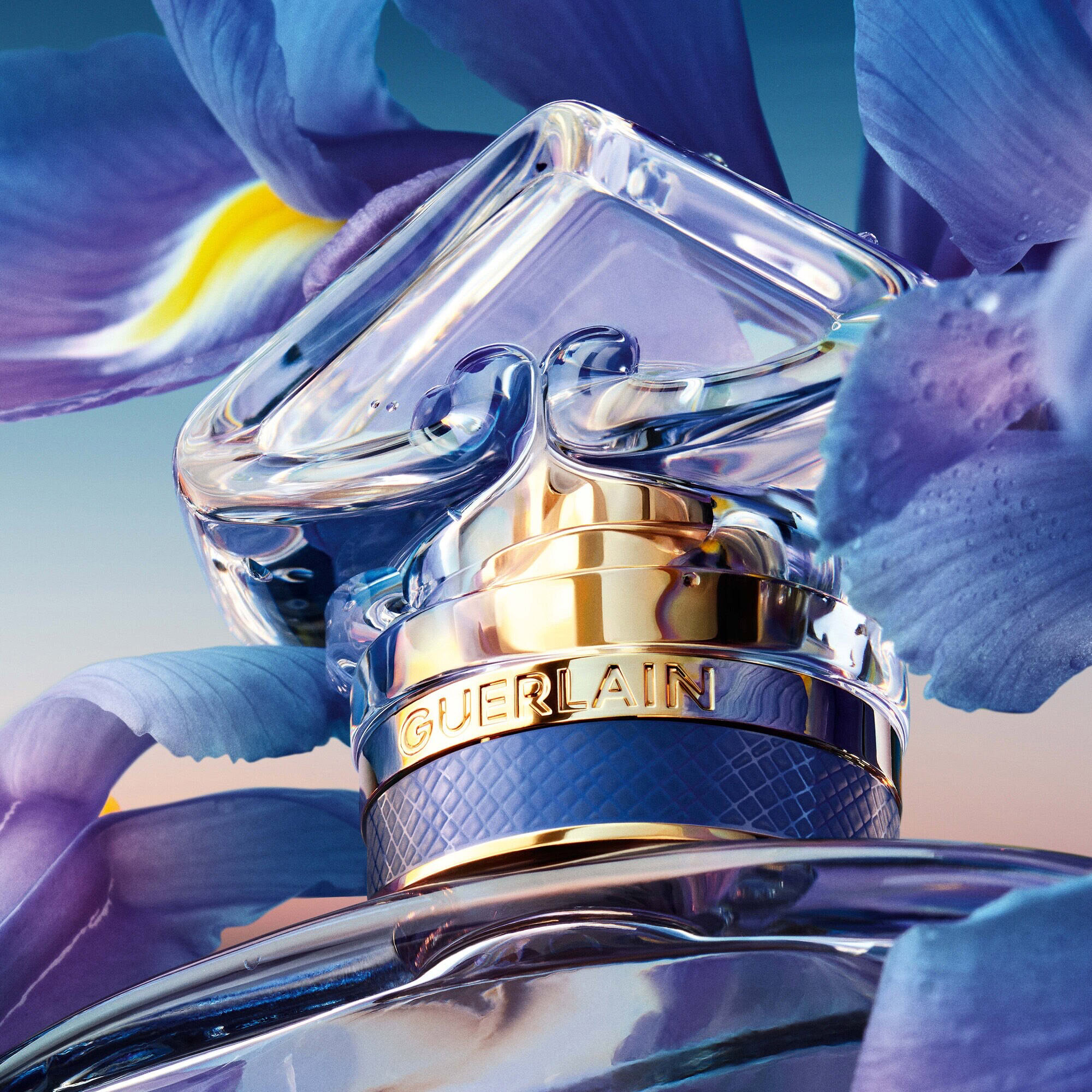
The base contains vanilla, ambroxan, and musks. Guerlain places warmth at this stage of the composition and identifies vanilla as a central element of the fragrance.
Vanilla brings the official note pyramid to its final phase. Ambroxan and musks complete the base published by the House. Guerlain’s description focuses on an enveloping vanilla trail and the presence of iris through the development of the Eau de Parfum.
The sequence begins with the airy ozonic accord, moves through the iris-centered heart, and settles into vanilla, ambroxan, and musks. The structure translates the blue-hour theme through atmosphere, floral texture, and warmth.
The Blue Hour in Guerlain’s Current Collection
Guerlain presents L’Heure Bleue Eau de Parfum as a contemporary reinterpretation signed by Delphine Jelk. Its official profile centers on an amber floral structure, an airy ozonic accord, a custom-developed iris tincture, and vanilla. The Inverted Heart bottle carries the composition in a deep blue gradient with gold lettering.
L’Heure Bleue 1912 remains listed within Les Légendaires. Its history begins with Jacques Guerlain, Lili, Impressionist art, and the quiet light following sunset. The current Eau de Parfum gives Delphine Jelk authorship of a composition built around the scent of the sky and Guerlain’s iris tincture.
The name continues to evoke a moment suspended in blue light. In Delphine Jelk’s L’Heure Bleue Eau de Parfum, the sky enters through an ozonic accord, pear, and neroli. Iris tincture, iris butter, and jasmine occupy the heart. Vanilla, ambroxan, and musks form the base. Guerlain’s blue hour enters 2026 through a defined note structure, a named perfumer, and the deep blue Inverted Heart bottle.
You may also like
Akro Heat by Olivier Cresp Centers Red Chili in a Woody Eau de Parfum
Henry Rose Rhu Berry - rhubarb walks into the pastry case
Maison Margiela Letter Never Sent - Tokyo, 1995, sealed in ink
CLEAN RESERVE Dark Cherry Intense: Whipped Cherry After Hours
Tommy Hilfiger Freedom - music, scent and a new chapter for the brand