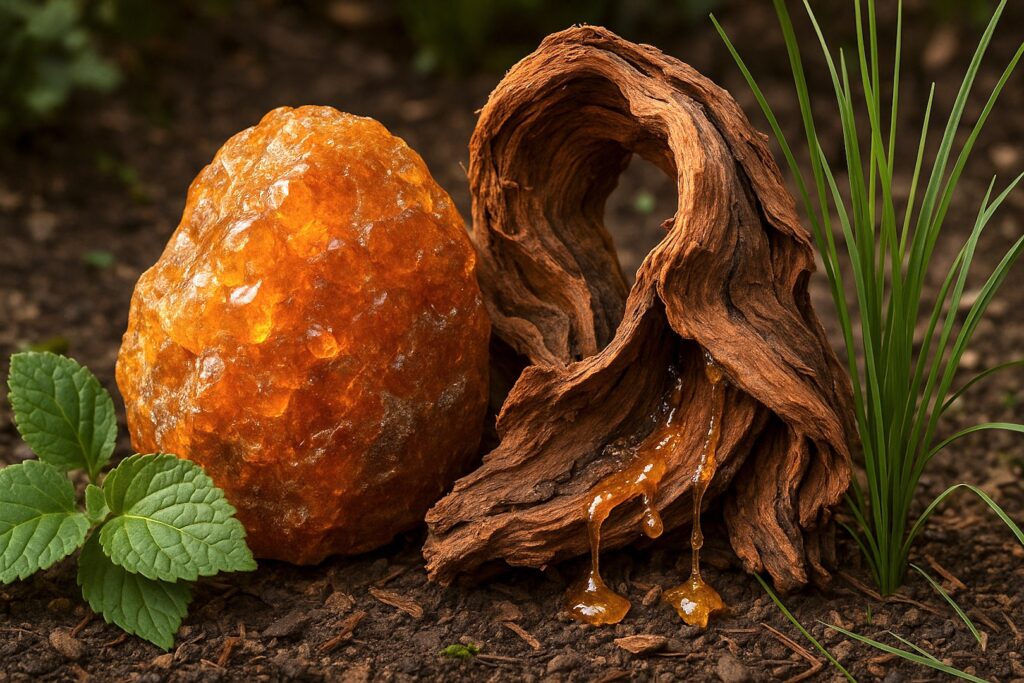
Woods & Resins: Timeless Pillars of Perfumery
Historical Significance
Woods and resins are among the oldest foundations of fragrance. Since antiquity, they have been used in sacred rituals, medicine, and early perfumery. Ancient Egyptians burned cedar, cypress, and frankincense in temples, while Indian and Chinese traditions valued sandalwood and agarwood for meditation and healing. Myrrh and frankincense traveled along trade routes from the Middle East to Europe, shaping both cultural practices and olfactory traditions.
In modern perfumery, they continue to provide structure, warmth, and longevity. Woody notes lend solidity, while resins contribute balsamic sweetness and depth, forming the backbone of many fragrance families.
Extraction and Preparation
Woods
- Steam distillation – Applied to cedarwood, sandalwood, and guaiac wood.
- CO₂ extraction – Produces oils that remain close to the raw material’s character.
- Tincturing – Historically used for precious woods such as agarwood.
Resins
- Incisions and tapping – Harvesting frankincense and myrrh through careful cuts in the bark.
- Solvent extraction – Yields resinoids and absolutes from labdanum or benzoin.
- Distillation – Produces essential oils such as olibanum from frankincense.
These processes capture both volatile and non-volatile elements, preserving the layered richness that defines woods and resins in perfumery.
Olfactory Profiles
Woods
- Sandalwood – Creamy, smooth, with soft milky sweetness.
- Cedarwood – Dry, crisp, and pencil-shaving-like.
- Guaiac wood – Smoky, slightly tarry, with gentle sweetness.
- Agarwood (oud) – Deep, resinous, leathery, and complex.
- Palo santo – Woody, balsamic, with incense-like qualities.
Resins
- Frankincense (olibanum) – Bright, citrusy, and resinous.
- Myrrh – Warm, balsamic, and slightly medicinal.
- Labdanum – Sweet, leathery, amber-like, often central to oriental accords.
- Benzoin – Vanilla-like with balsamic warmth.
- Styrax – Smoky, leathery resin with gentle sweetness.
Together, woods and resins give fragrances structure, grounding, and atmospheric resonance.
Role in Fragrance Composition
These materials are vital for depth and longevity within perfume design:
- Orientals and ambers – Built on labdanum and benzoin.
- Woody fragrances – Structured with sandalwood, cedar, or oud.
- Incense perfumes – Shaped by frankincense, myrrh, or styrax.
- Chypres – Enriched by labdanum with oakmoss.
- Modern gourmands – Warmed by benzoin or vanilla-linked resins.
Often used in base notes, they ensure balance, stability, and a lasting trail.
Aroma Chemistry
The complexity of woods and resins arises from a spectrum of molecules:
- Santalol (sandalwood) – Smooth, milky-woody character.
- Cedrol (cedarwood) – Dry, clean woody nuance.
- Incensole and pinene (frankincense) – Resinous brightness with pine facets.
- Furanosesquiterpenes (myrrh) – Balsamic warmth with medicinal depth.
- Cinnamic acid esters (benzoin, styrax) – Sweet, balsamic undertones.
These compounds explain their enduring use as anchors of fragrance composition.
Sensory Impression
Woods and resins evoke temples filled with smoke, sun-warmed forests, and rituals preserved through centuries. Their presence carries both grounding stability and a sense of transcendence, binding the sensory with the spiritual.
Lasting Resonance
As pillars of perfumery, woods and resins embody warmth, depth, and permanence. From sacred origins to contemporary fragrance design, they continue to inspire perfumers and captivate wearers with their enduring aromatic power.